




If you’re a smartphone owner, there’s a good chance that you have your fair share of social media apps on your device.
There are a lot of people out there who can’t imagine life without their social media apps, going on them every day. However, while social media can be entertaining, it comes with its fair share of safety risks, and can also have an impact on the way your device functions. We spoke with tech experts about six social media apps you should consider deleting for more privacy and a longer-lasting device. Read more about them below.

Women Are Swapping Their Boring Water For This Ice Pop Electrolyte Mix!
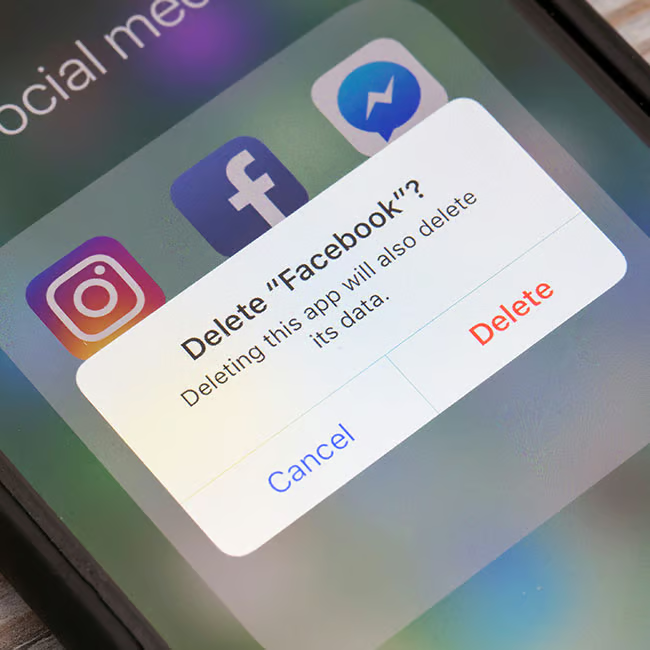
1. Facebook
Facebook is like the blueprint of social media apps, having been around for so long. It's come quite a long way since it first came out, and has a lot more features than it used to. This has made it riskier over the years, according to tech experts.
"Facebook runs multiple background services for syncing, notifications, location tracking, and ad profiling," says tech pro Sanjeev Kumar. "Even when the app is not actively in use, it continues consuming battery and mobile data. It's heavy caching and constant background activity make it one of the biggest performance drainers on smartphones."

2. Instagram
Like Facebook, Instagram has evolved greatly over the years. Aside from posting and sharing photos, users can now add stories, use their interactive map feature, share videos, and more. This means that the app often works overtime to keep all of these things updated.
"Instagram continuously refreshes feeds, stories, reels, and advertisements in the background," notes Kumar. "It also tracks user behavior for ad targeting, which increases background network usage. This leads to higher battery drain and unnecessary data consumption over time."

3. TikTok
TikTok is easily one of the biggest social media apps of today, with millions of people sharing and watching viral videos. While it's super entertaining, tech experts have long been warning users about its safety risks.
"TikTok doesn't require access to your GPS location to know your location, as it extracts the IP, SIM, and network information you use regardless," explains tech expert Steven Athwal. "The whole service is founded on tracking, which means that removing it will give you the fastest data leak reduction."

4. LinkedIn
If you're a working adult and smartphone owner, then there's a good chance you have LinkedIn on your device. After all, the app is great for job hunting and networking. However, if you can stick to using it on a desktop, that might be for the best in the long run.
"LinkedIn runs background syncing for messages, job alerts, feed updates, and profile tracking," adds Kumar. "For users who open the app only occasionally, these background services still consume battery and mobile data unnecessarily."
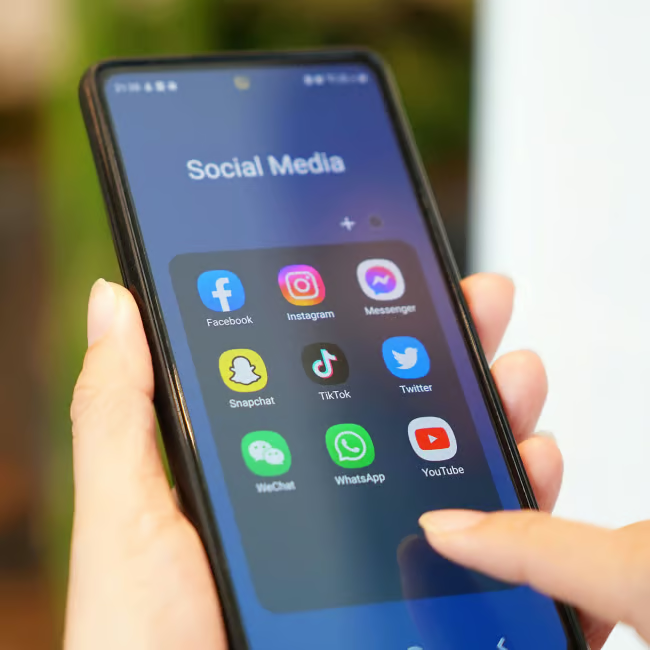
5. Snapchat
Although Snapchat has been a popular social media app for years now, surprisingly, it's an app that many tech and cybersecurity pros have been warning people about due to its safety risks. Additionally, it's another app with a lot of background activity.
"Activating Ghost Mode does not prevent Snapchat from tracking your location," says Athwal. "It continues recording your location via IP, cell towers, and Wi-Fi. If location privacy is important, the Snapchat app has got to go too."

6. X (Formerly Twitter)
X, which was formerly Twitter, is another app that's been around for a long time and can contain a lot of entertaining posts. However, if you're struggling to save up some space and data, and don't use it that often, it might be worth deleting.
"X frequently refreshes timelines, trending topics, and notifications in real time," explains Kumar. "This constant background activity increases battery usage and data consumption, especially for users who keep notifications enabled throughout the day."