




SheFinds receives commissions for purchases made through the links in this post.
Lately, my 3-year-old daughter has been going full “American Ninja Warrior” when she’s cooped up indoors for too long—which means I’ve gotten a little too familiar with our living room furniture IYKYK.
The past few months have been especially tricky. It’s been freezing outside so playground runs are limited, and while we still sneak in some of our favorite family outings (like afternoons at the aquarium), everywhere feels packed with parents and kids who clearly had the exact same plan. By now, it seems like my daughter has worn a permanent path between the couch, the rug, and every chair in sight, while I emotionally brace myself for her next big jump or climb. Playtime at home has become less about relaxing and more about figuring out how to let her move safely, without turning the entire space upside down. All of it has got me thinking more about Smart Playrooms.
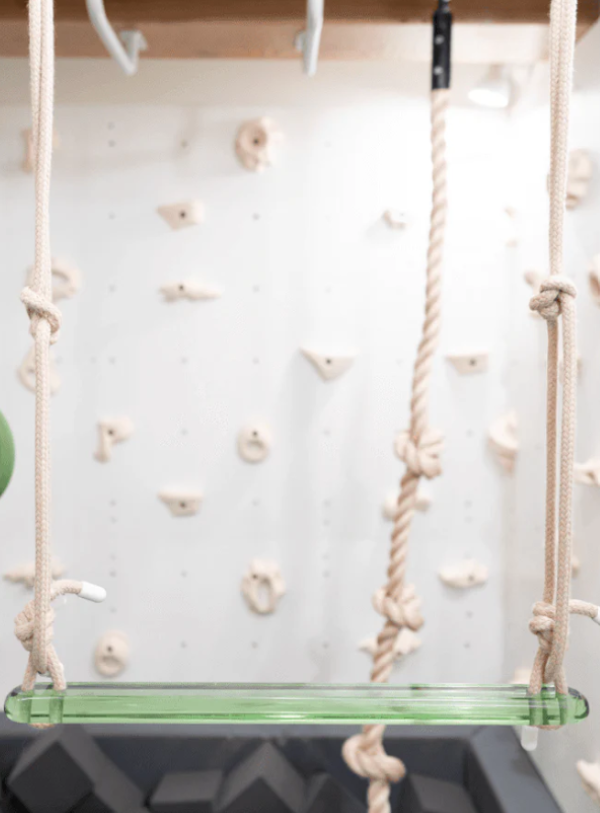
Rather than tossing a ball pit or a pile of toys into a corner and calling it a play area, Smart Playrooms approaches play as intentional design. Everything is meant to support how children naturally move, climb, balance, and explore, while still fitting seamlessly into a home. Their playrooms often incorporate elements that encourage sensory exploration, active play, and coordination, but they never feel chaotic or overly “kid-centric.” Instead, the spaces feel thoughtful and cohesive, blending play with the rest of the home in a way that works for the entire family.
Now, my family lives in a townhouse, so square footage is definitely something we think about. We don’t have a dedicated playroom or a sprawling basement to transform, but we do have really high ceilings. So when I was scrolling through Smart Playrooms’ offerings, their Popsicle Trapeze Bar caught my eye. The trapeze, created in collaboration with designer Gabrielle Noelle and available exclusively through Smart Playrooms, almost feels more like a sculptural design element than a traditional piece of play equipment. The solid 1-inch acrylic bar is hand-polished and beveled, so it has a smooth, minimal look that feels more like part of the room than typical play equipment.

I’m really sold on how versatile this trapeze is. Unlike a traditional swing that only does one thing, this one invites all kinds of movement. Kids can swing, hang, sit, stabilize, or even flip upside down. One day, it might be part of obstacle-style play—and the next, a quiet spot for imaginative movement.
I love the idea of it because my daughter can lose interest in something in about two minutes flat. I’ll think she’s fully invested in her dolls or coloring before she turns around asking for a snack or requesting to watch “Frozen 2” for the fiftieth time. The trapeze feels like the kind of thing that could keep her engaged longer. And since the height is adjustable, it’s designed to adapt as kids grow and their play evolves (which is surprisingly rare with indoor play equipment).
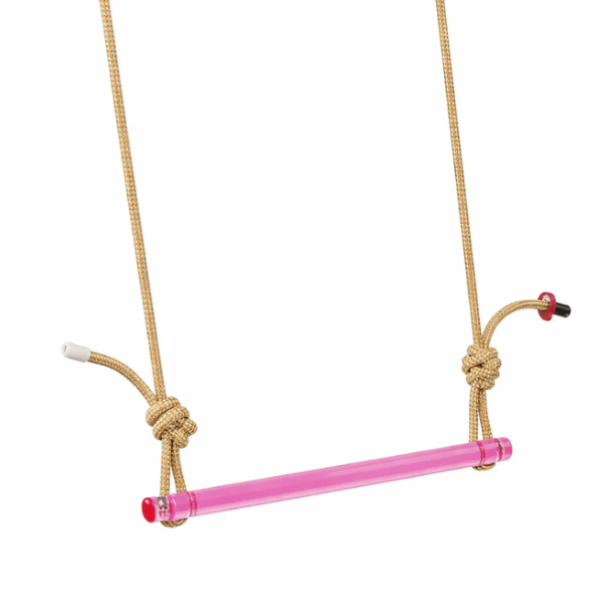
Another thing that surprised me is how thoughtfully designed the trapeze itself is. The solid acrylic bar is incredibly durable but still lightweight (about 3.5 pounds including the rope) so it feels substantial without being bulky. The arborist rope is designed for ceilings up to 12 feet (perfect for homes with higher ceilings like ours!), and it includes black powder-coated stainless steel carabiners for secure installation. Many families install it over landing mats or near foam pits to create a designated active play zone, but it can work just as well in a bedroom or shared living space.
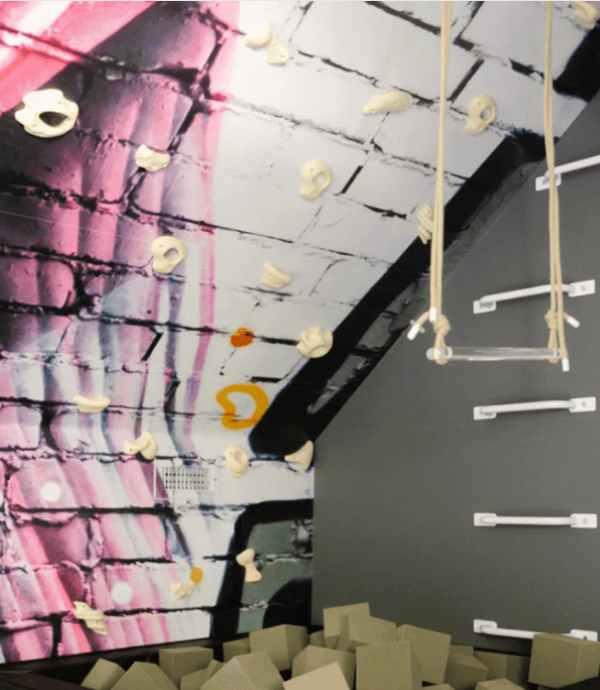
More than anything, the trapeze feels like a good example of how Smart Playrooms approaches play at home. It encourages movement without taking over the entire room, and it fits naturally into everyday spaces, even smaller ones like our townhouse. Plus, it evolves with your child instead of being something they’ll outgrow in a year or two.
As parents, we’re constantly trying to balance creativity, safety, development, and, let’s be honest, sanity—especially when it’s snowing and getting outside isn’t an option. Having ways for kids to move, climb, and burn energy indoors can make a huge difference. Sometimes the goal isn’t to quiet that burst of energy, but to give it somewhere to go.
You can check out more amazing playroom designs at smartplayrooms.com.
The editors at SheFinds wrote this post on behalf of Smart Playrooms and received compensation as part of our agreement.