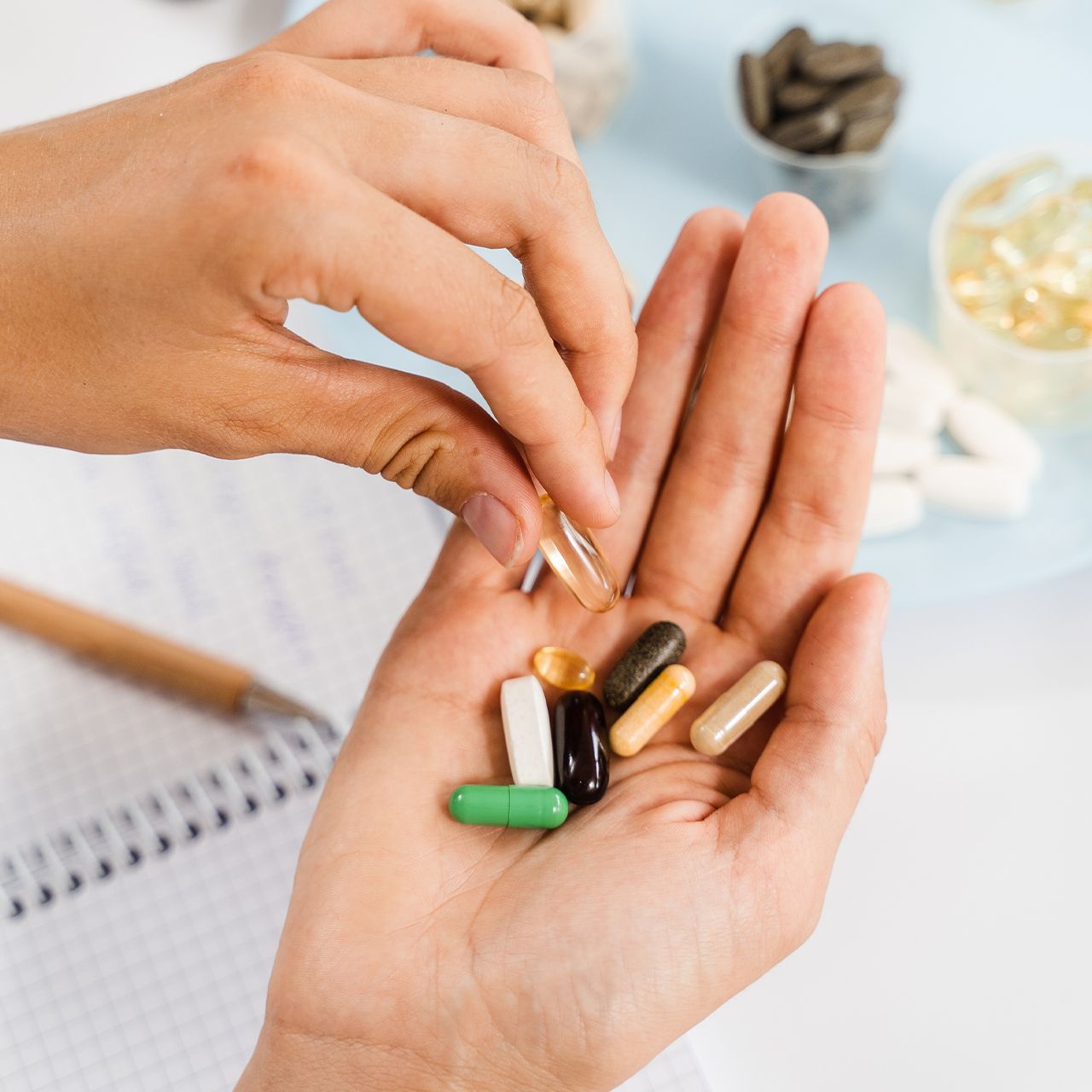





If you walk down the supplement aisle, you’ll find products promising a whole range of benefits, from better sleep and less stress to clear skin and shiny hair. But it’s important to take these claims with a grain of salt and remember that even the best supplements can’t work miracles—and in some cases, they could even backfire on your health. The unfortunate truth is that, like anything else you put into your body, all supplements come with potential risks, and some might do more damage than good—especially when consumed in excess.
To learn about a few potentially harmful options to be aware of, we sought insight from health experts HaVy Ngo-Hamilton, Pharm.D.; Jesse Feder, RDN, CPT, registered nutritionist; and Dr. Charles, who shared a TikTok on the matter. Find all of their expert advice below.

Women Are Swapping Their Boring Water For This Ice Pop Electrolyte Mix!

1. Vitamin A can damage your liver
Dr. Charles warns viewers about the popular belief that Vitamin A supplements can work wonders for the skin and eyes. Although Vitamin A is certainly an important nutrient, he highlights a darker side to excessive Vitamin A intake, which could be a result of supplementation.
"People think it can help your skin and eyes, but it can actually build up in your body and cause liver damage," he cautions. While Vitamin A is essential for maintaining healthy skin and vision, excessive amounts from supplements can indeed lead to toxicity, affecting the liver and causing a range of health issues. Instead, it's best to get this vitamin directly from the foods you eat.

2. Excessive Vitamin D and Calcium can damage your heart
Deficiencies in vitamin D and calcium are prevalent, often stemming from inadequate sun exposure. Consequently, many turn to supplements to meet their nutritional needs. However, excessive intake of these nutrients may heighten the risk of cardiovascular diseases.
HaVy Ngo-Hamilton warns, "Too much vitamin D and calcium can increase the risk of cardiovascular diseases, especially if these supplements are purchased from non-credible sources."
Before incorporating these supplements into your routine, it's crucial to consult with your healthcare provider and assess your blood levels to determine if supplementation is necessary. When in doubt, getting these nutrients straight from the foods you eat is your best bet.

3. Omega-3 supplements can interfere with medications
Omega-3 fatty acids are renowned for their cardiovascular benefits, but their interaction with certain medications warrants caution. HaVy Ngo-Hamilton highlights the potential interaction with platelets, crucial blood cells involved in clotting.
"If you are taking clopidogrel (Plavix) or Coumadin (warfarin), you should talk to your doctor before taking omega-3 supplements." It's essential to exercise caution, especially when combining supplements with prescription medications.

4. Kava can damage your kidney and liver
Kava is a popular anti-stress supplement that many people consume in order to bring a sense of calm to their brain and body. "Kava, which is typically consumed as a tea, is a supplement known to promote relaxation," Feder explains.
Unfortunately, though, this relaxation could come with a risk; "Consuming kava regularly has been shown to affect enzyme and antioxidant activity in the liver which can lead to liver damage." Yikes!

The Bottom Line
Does this mean you should cut out supplements entirely? Not necessarily. In many cases, supplementation can be a great way to support your overall health. However, it's crucial to talk to your doctor and assess your needs before adding a new supplement to your regimen—especially if it's one on this list. If you follow the guidance of your healthcare provider and stick to recommend doses, you should be in good hands.