


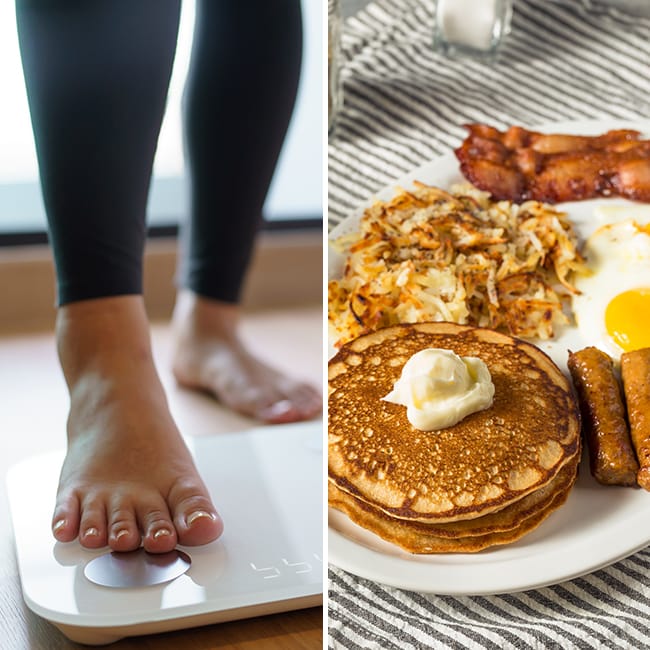
Weight loss can often be an uphill battle—and it can be an especially difficult process for women experiencing menopause. It might feel like there are endless factors working against you throughout middle age, from hormonal shifts and loss of muscle mass to lifestyle changes. The good news is that maintaining a great body is still possible. However, some of the habits you may be implementing in attempts to combat menopausal weight gain could actually be counterproductive. Not every diet tip is as helpful as it seems!
To shed some light on a few seemingly healthy habits that might be backfiring during menopause, we spoke to Elizabeth M. Ward, MS, RDN, co-author of The Menopause Diet Plan, A Natural Guide to Managing Hormones, Health, and Happiness. She warned against diet faux-pas and exercise oversights. Find all of her expert insight below.

Women Are Swapping Their Boring Water For This Ice Pop Electrolyte Mix!

1. Piling on the protein with no regard for calories
Protein is one of the most important parts of any balanced meal—but calorie deficits matter for weight loss. "Menopausal women are constantly being told to eat more protein, but you can't just add protein to your diet because it has calories that can result in weight gain," Ward explains.
The key is to strike a balance that prioritizes protein while still keeping meals within a reasonable caloric range for your body. "Replace this habit by figuring out how much protein you need and fitting it into your calorie calculation for weight loss or maintenance," she recommends. That way, you can lose weight while keeping your body properly fueled!

2. Drastically cutting carbs
Contrary to what diet culture may have led you to believe, carbs are not the enemy! "Women tend to blame carbohydrates for weight gain, but drastically reducing them can backfire," Ward tells us. "That's because many carbohydrate-rich foods also contain fiber which helps to keep you fuller for longer." And that fiber can do wonders for your weight loss efforts. As she explains, "A higher intake of soluble fiber has been associated with a reduced risk of visceral (belly) fat."
That means the solution isn't eliminating carbs; it's choosing the right healthy carbs. Ward recommends "focusing on including high-fiber foods such as berries, whole grain bread, lentils, and legumes." Perfect!

3. Lots of cardio and no strength training
Yes, cardio is a crucial component of weight loss. Fat-burning exercises can take you far. As Ward notes, "There is nothing wrong with brisk walking, running and biking." However, "cardio doesn't build muscle mass as well as strength training." And muscle-building plays a central role in weight management, especially during menopause.
"Muscle burns more calories than fat and women should take steps to preserve and build muscle during menopause and for the rest of their lives," Ward says. Her suggestion? "Do at least 150 minutes of moderate-intensity exercise and two sessions of challenging weight training every week."

4. Skipping breakfast
The secret isn't to consume as few calories as possible by skipping meals; it's to choose nutritious foods. Restrictive diets can do some serious damage and can even be counterproductive to your weight loss goals. "Many women skip breakfast to curb calorie intake, but this can work against them in a few ways," Ward says. "Insulin has a circadian rhythm and is most active during the earlier part of the day."
You might be surprised to learn that a bigger nutritious breakfast can actually help shed pounds. "Eating most of your calories earlier in the day is associated with easier weight control," Ward points out. Shrinking your dinners may be helpful in fostering appetite control and paving the way for a more nutritious breakfast. "Women may not be hungry for breakfast because they are in a cycle where they skimp on food during the day and eat most of their calories at dinner and before bedtime. They may have more of an appetite for breakfast, and lunch, if they ate less in the evening." The more you know!

5. Cutting out all of your favorite foods
It might seem like the only path to sustainable weight loss during menopause is saying farewell to all the treats you love, but Ward assures us this is far from the truth. "Not allowing yourself to eat chocolate, ice cream or fries can lead to feeling angry and deprived," she says. "Deprivation usually results in binging on your favorite foods which can lead to feelings of shame and weight gain. I suggest making room in your eating plan for small amounts of your favorite foods (I eat chocolate every day!) and accept that weight loss might be a bit slower but at least you will feel satisfied."
You really can have it all!