



If you’re trying to lose weight in 2026, it’s easy to assume that anything labeled “healthy” is automatically helping your progress. But nutritionists say that’s not always the case. In fact, several everyday staples often marketed as nutritious could be quietly working against your goals—especially when it comes to blood sugar spikes, hidden sugars, and inflammatory ingredients.
Experts warn that these so-called “health foods” can sometimes lead to overeating, cravings, and stalled weight loss, even when you’re doing everything else right. From drinks that disguise sugar as wellness to snacks that look wholesome but aren’t as balanced as they seem, the details matter more than ever.
Here are 5 “healthy” foods nutritionists say could actually be slowing down your weight loss progress in 2026—and what to watch out for instead.

Women Are Swapping Their Boring Water For This Ice Pop Electrolyte Mix!

1. Fruit Juice/Sports Drinks
Just because a beverage has the word “fruit” in it doesn’t make it healthy.
Dr. Sue Clenton, an oncologist and specialist consultant at Releaf, says that “fruit juices and sports drinks are often loaded with sugar, which can contribute to weight gain, inflammation, and an increased risk of various cancers.”
She warns not to be deceived by these seemingly harmless drinks, as they can be detrimental to overall well-being. “High sugar intake is linked to obesity, insulin resistance, and chronic inflammation, all of which increase the risk of developing various types of cancer. Artificial sweeteners and certain preservatives, such as BPA, can disrupt hormone regulation and potentially contribute to hormone-sensitive cancers.”

2. Sugary Granola
Some granolas contain refined grains, which lack the fiber and nutrients found in whole grains, leading to quicker digestion and potential blood sugar spikes. Granolas often contain added oils, which can be high in unhealthy fats, especially if they are hydrogenated or highly processed.
Kathleen McDermott, MSN, RN, says it would be smart to just make your own granola at home. You can start by using whole oats, a small amount of natural sweeteners like honey or maple syrup, and healthy fats like coconut oil or olive oil. Add nuts, seeds, and dried fruits without added sugars. Or, look for store-bought granolas labeled as low-sugar or no-added-sugar, which use whole grains and minimal sweeteners.

3. Sweetened Yogurt
The high sugar content in sweetened yogurts can outweigh the benefits of the probiotics and protein they provide, leading to potential health issues, with inflammation being one of them.
Most commercial yogurts are also packed with sugar and preservatives. "Many average-sized cups of flavored yogurt have 30 grams of sugar, equivalent to 7.5 teaspoons. Many chocolate bars have the same amount of sugar," she says.
Opt for plain Greek yogurt, which is lower in sugar and higher in protein compared to flavored varieties. You can add natural sweetness with fresh fruits like berries, bananas, or a drizzle of honey.

4. Diet soda
Unfortunately, nutritionist Lisa Richards, creator of The Candida Diet, confirms that diet soda can be just as bad as regular, sugary soda in different ways. That’s because, in place of sugar, the diet variety is loaded with artificial sweeteners, which come with their own share of health risks. That means what you save in calories, you lose in other areas of your health.
"While diet soda may be lower in calories and sugar than regular soda, it is not necessarily a healthy choice," Richards warns. "Artificial sweeteners, such as aspartame and sucralose, which are commonly used in diet soda, have been the subject of ongoing debate and controversy regarding their potential health effects."
5. Flavored Protein Shakes
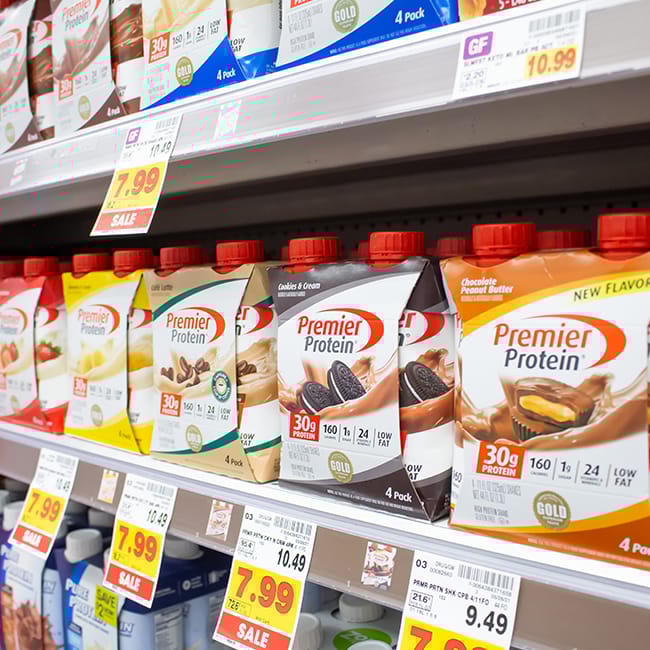
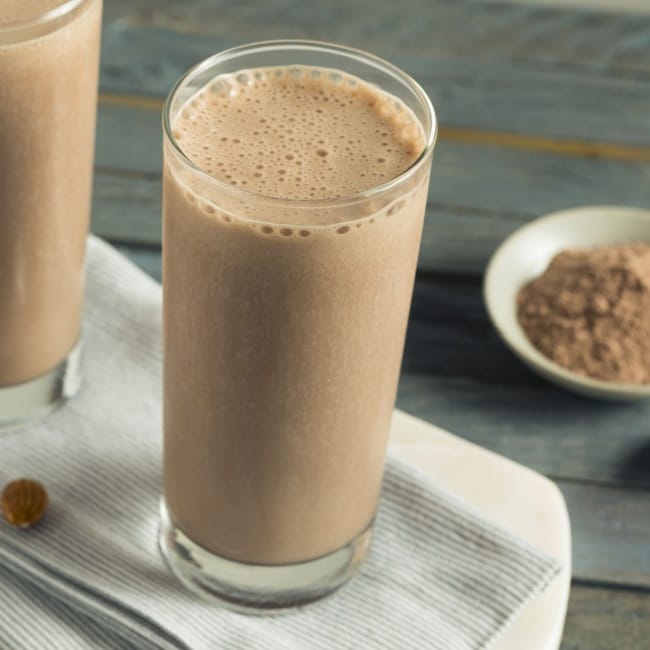
Flavored or pre-made protein shakes may seem healthy, but many are loaded with added sugars, artificial flavors, and preservatives. Drinking them regularly can contribute to inflammation and unstable blood sugar levels, especially when consumed in place of whole-food meals.
"Many commercially flavored protein shakes contain high amounts of added sugar and artificial ingredients that can trigger inflammatory responses," says Registered dietitian Kathleen Benson, CSSD, CPT, RDN at VNutrition. "Even though they provide protein, the sugar spikes and additives can offset the benefits. Choosing unsweetened or minimally sweetened protein powders and mixing them with whole-food ingredients is a more supportive approach."