




With my 3-year-old daughter set for her biannual dentist visit this month and my husband on month eight of his Invisalign treatment, you could say oral health’s been on my mind more than usual.
My husband was one of those kids whose teeth were “good enough” to skip braces. Back then, it felt like a win. But as the years went on, overcrowding developed, discomfort crept in, and eventually that discomfort became one of the reasons he avoided the dentist altogether. What started as something minor slowly became something harder to ignore. Looking back, we both wonder how different things might have been if he’d had a clearer picture of what was happening earlier on.
And he’s far from alone. More than 70% of American adults have some degree of tooth misalignment, and while many people assume that’s purely cosmetic, alignment issues can have real structural consequences.¹ Misaligned teeth can influence premature wear and tear, dental hygiene and cleanliness, and even whether you experience jaw tension or headaches. Basically, what starts out as a minor thing can become more problematic over time, which is why shifting from a reactive mindset—fixing problems once they’re visible—to a preventative one is so important.
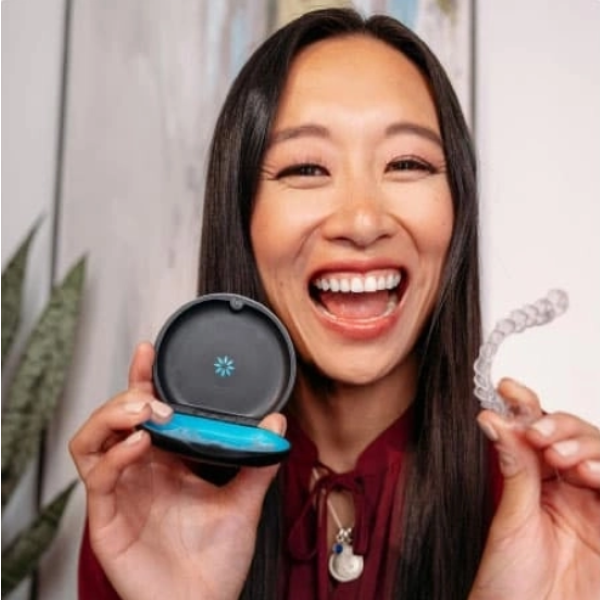
Most of us think of Invisalign as clear, removable aligners. To be fair, the brand is the #1 doctor-recommended clear aligner,² with more than 22 million smiles treated worldwide (including 6 million teens). Treatment averages around six months, which is roughly five months faster than traditional braces, depending on your individual case.
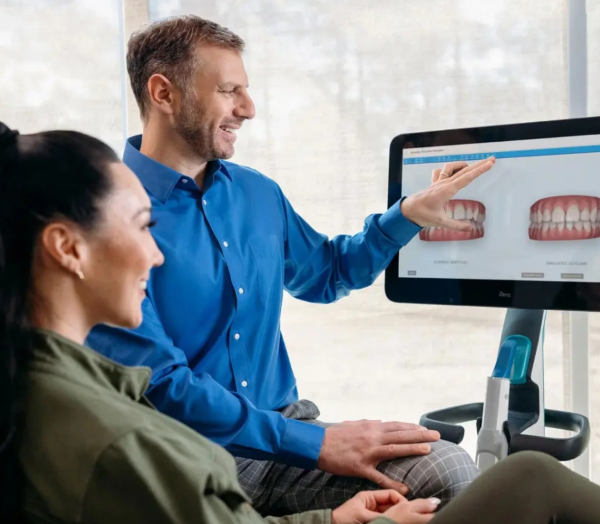
But beyond treatment, Invisalign emphasizes early insight through its Oral Health Scan. This fast, 10–15 minute scan uses advanced 3D imaging technology to create an instant digital model of your teeth and gums. A handheld wand captures thousands of images per second, allowing providers to evaluate gum health, tooth health, areas of wear, and potential alignment concerns. It’s a non-invasive way to better understand what’s happening beneath the surface of your smile, and a smart starting point for anyone who wants to take a more proactive approach to their oral health.
To better understand why this preventative approach matters, I asked Dr. Amy Gimlen, DDS, MS, a Los Angeles-based dentist, to weigh in. “I see more patients asking about long-term solutions instead of quick fixes,” Dr. Gimlen said. “Many women in their 40s and 50s want to understand their oral health earlier and more comprehensively. With the Invisalign Oral Health Scan, we can identify alignment or gum concerns before they progress. That makes treatment options simpler, more conservative, and more cost-effective.” This shift toward prevention reflects a broader trend in wellness: addressing root causes instead of waiting for symptoms to escalate.
As Dr. Gimlen referenced, a preventative mindset can make a big financial difference. When teeth alignment issues go unaddressed, they can lead to more complex (and costly) restorative treatments, like crowns, bonding, or other corrective work. Identifying concerns early through a scan allows patients and providers to build a proactive plan, often before more invasive intervention is necessary.
Invisalign treatment is comparable in cost to traditional braces, and the great news is that many insurance plans may contribute up to $3,000 toward treatment. Invisalign treatment is also HSA/FSA eligible, meaning pre-tax dollars can be used to help cover costs—something my husband is using to help offset his care. Flexible payment plans and financing options are available through providers as well. Of course, treatment decisions are always personal and made with a doctor, but I appreciate that Invisalign’s Oral Health Scan itself is a simple, accessible first step. Cost varies by provider, and you don’t have to commit to anything to get clarity.

Watching my daughter build lifelong dental habits and seeing my husband move through his Invisalign journey has reminded me that oral health is worth understanding early, consistently, and proactively. When you have the right information early, you have more options. Invisalign’s Oral Health Scan reflects that approach, combining advanced technology with preventative insight to help identify potential concerns before they become more complex. Sometimes, the most empowering step is simply knowing where you stand.
Find your Invisalign doctor and ask about the Invisalign Oral Health Scan. Visit Invisalign.com.
¹Prevalence and distribution of selected occlusal characteristics in the US population, 1988-1991. Brunelle et. Journal of Dental Research. (2/96)
²Data on file at Align Technology, as of September 30, 2025
The editors at SheFinds wrote this post on behalf of Invisalign and received compensation as part of our agreement.