





Believe it or not, there are actually good and bad ways to charge your iPhone, and many people practice ‘bad’ charging habits every day.
Charging an iPhone might seem quite simple, and while it can be, there are certain small charging habits that can end up making a big difference in how long your device’s battery lasts. Continually practicing bad charging habits not only will cause your full charge to dissipate quickly, but they can also damage your battery to the point of needing a new one. We spoke with tech pros about two of the worst charging habits that can eventually lead to battery repair or replacement. Read more about them below.

Women Are Swapping Their Boring Water For This Ice Pop Electrolyte Mix!
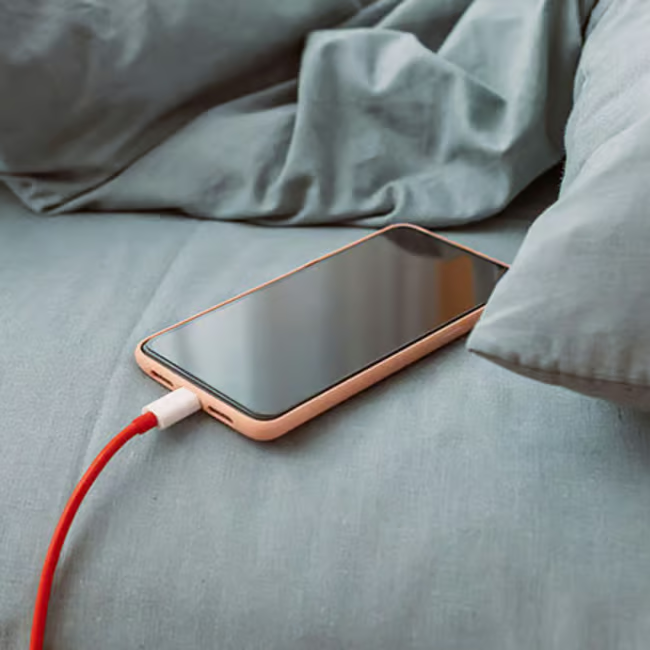
1. Always Leaving Your Phone Plugged In Overnight
For many people, a big part of their bedtime routine is plugging in their iPhones right before falling asleep, and leaving them on the bedside table the entire night. This seems like a fine habit, but when you do it every single night, you can end up severely hurting your battery.
"Leaving your iPhone plugged in overnight every single night is one of the most common ways people quietly destroy their battery without realizing it," explains tech repair pro Sam Devia. "Lithium-ion batteries are not designed to sit at 100% charge for hours on end; it puts constant stress on the cells and breaks them down over time. After a year or two of this habit, you'll start noticing your phone dying at 30% or your battery health tanking into the 70s. That's usually when people come into my shop convinced something is wrong with their phone, when really it's just years of bad charging habits catching up to them."

2. Letting Your Battery Drain All The Way Down To 0%
For some people, it can be hard to take a charging break during their busy day or evening, and at some point, their battery drains all the way to 0% and dies. Although that's fine from time to time, letting your phone battery deplete all the way to dying frequently does more harm than you might think.
"One of the bad habits we see is when people allow their iPhone's battery to deplete to zero before charging it regularly," says tech expert Steven Athwal. "Lithium-ion batteries don't like to discharge too low; in fact, the chemistry in the battery gets stressed when it reaches low voltage levels. It's for this reason that we see batteries in iPhones that are constantly drained to zero capacity need." replacement early in their lifespan.