




Hormones affect nearly every system in your body, from your menstrual cycle to your skin, sleep, and even weight. When something about your body feels a little bit off, it’s easy to brush it to the side and write it off as stress, aging, or a passing phase. However, certain changes can signal a deeper hormonal imbalance.
According to Dr. Alyssa Dweck, MS, MD, FACOG, MSCP, Chief Medical Officer of Bonafide Health and a Menopause Society Certified Practitioner, hormone shifts can show up in ways you may not immediately notice as a hormonal issue. Here are seven signs she says are worth paying attention to—and when it may be time to dig a little deeper.

Women Are Swapping Their Boring Water For This Ice Pop Electrolyte Mix!

1. Changes in menstrual habits
Any noticeable change in your period—whether that's a heavier or lighter flow, shorter or longer cycles, or missed periods—can be a sign of changing hormone levels. "Any change in the cycle can signal a hormone fluctuation," Dr. Dweck says. "Menstrual flow changes in amount, duration, or cycle length can signal a hormone change."
She also notes that bleeding between cycles can be another red flag. "We like to consider the menstrual cycle to be almost like an additional vital sign and window into one’s health," she explains. To determine the cause, doctors may rely on "a good medical history, physical exam, blood work to check for hormones and other health parameters, and in some cases imaging like pelvic ultrasound." Pregnancy, she adds, is "often part of the work up here."

2. Hair loss or thinning
If you’re noticing widening parts, clumps of hair in the shower, or changes in texture and breakage, it's not just your stress levels you should evaluate—hormones could also be at play. "Thinning hair, widening of the part, hair loss in clumps and change in hair texture or breakage can be due to thyroid hormone imbalance, testosterone changes, post-partum and lactation hormone changes and peri/menopause hormone shifts," Dr. Dweck says.
Evaluating hair loss often involves "a thorough medical history, exam, blood work and possible scalp biopsy," she tells us. Treatment varies widely depending on the cause and may range from addressing medical issues like anemia or thyroid disease to cosmetic management with supplements or medications.
3. Adult acne
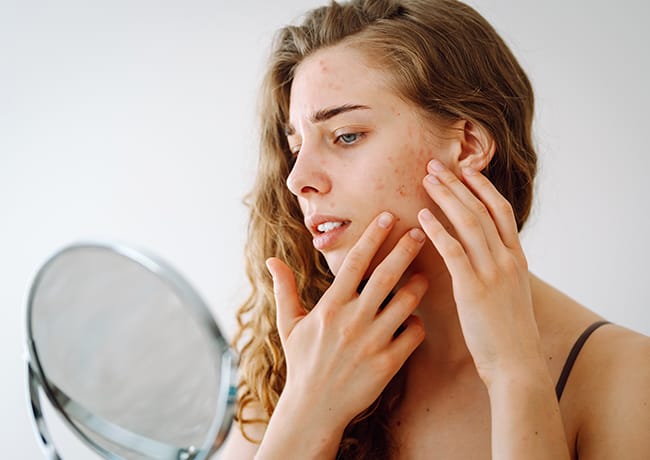
Breakouts aren’t just a teenage issue! But as an adult, they could be a warning sign. "Oftentimes, acne results from elevated androgen hormones such as testosterone or DHEAS," Dr. Dweck explains. Hormonal acne can be persistent and resistant to over-the-counter treatments.
Diagnosis typically includes "a thorough medical history, physical exam, blood work and imaging," she says. Treatment may involve medications to lower testosterone, antibiotics, or topical prescriptions to get symptoms under control.

4. Vaginal dryness
Vaginal dryness is commonly associated with menopause, but it can also happen earlier due to shifting estrogen levels. "This symptom can occur due to low estrogen states including menopause, perimenopause, oral contraceptive use and lactation," Dr. Dweck says. She also notes that "chronic antihistamine use might also cause vaginal dryness."
To rule out other issues, doctors may use vaginal cultures, blood work, and a physical exam. As for treatment, Dr. Dweck says, "Management typically involves a well-studied vaginal moisturizer containing hyaluronic acid (HLA)…as a first line tool in addition to lubricants during intimacy." Vaginal estrogen may also be an option for some patients.

5. Facial hair growth
Hair loss isn't the only hair-related sign of hormonal imbalances. Unexpected facial hair—especially on the chin, upper lip, or sideburns—can be unsettling. According to Dr. Dweck, "Facial hair particularly on the chin, sideburns or upper lip can result from elevated androgen hormones such as testosterone or DHEAS."
That said, she points out that "many times, facial hirsutism is just constitutional and genetically based with no underlying disorder." Regardless of cause, management often includes cosmetic solutions like waxing, laser hair removal, or electrolysis, with medications considered if a hormone imbalance is found.

6. Unexplained weight changes
You might be excited to see the number on the scale go down, but rapid weight gain or loss without a clear reason can sometimes signal a hormone-related issue, too. "Rapid weight change in either direction might signify hormone imbalance due to thyroid issue, peri/menopause hormone changes, prediabetes/diabetes, metabolic syndrome, or PCOS," Dr. Dweck says.
Because there are many possible causes, she emphasizes the importance of "a thorough medical workup (history, physical, labs, imaging)" to determine appropriate treatment.

7. Sleep disruptions
If you frequently find yourself struggling to fall or stay asleep, there are a lot of reasons to consider, including your sleep hygiene—but your hormone levels may be contributing. "Alterations in estrogen and progesterone during menopause and perimenopause can alter sleep," Dr. Dweck explains, noting that shifts in brain chemicals like serotonin and melatonin can play a role.
She adds that hormone changes can worsen conditions like sleep apnea and restless legs syndrome, while thyroid dysfunction can also interfere with rest. "Treating hot flashes and night sweats is vital to improving sleep," she says, emphasizing that addressing the root cause is key to long-term relief.
Bottom Line
Hormonal changes can show up in subtle ways that are easy to dismiss, but according to Dr. Dweck, paying attention to these changes in your body is one important way to keep your overall wellbeing in check. If symptoms are persistent or disruptive, it's a good idea to talk to your doctor and uncover the root cause in order to find effective treatment.