

As we get older, maintaining a strong core and staying mobile becomes increasingly important both for fitness and for comfort. Stubborn belly fat can be harder to lose with age, even if you exercise regularly, and you may find that you’re joints are getting achy and flexibility is waning. Luckily, there are simple habits that can combat this—including some exercises you might consider adding to your daily routine.
While there’s no magic move that specifically targets belly fat, the right exercises can help strengthen the core, improve posture, and increase calorie burn, explains Adam Dobrez, owner of Red Fox Gym, certified personal trainer, and post-rehabilitative exercise specialist.
And the good news is that you don’t have to rely on high-impact workouts or intense gym sessions to see results. Low-impact exercises can be incredibly effective, especially when performed consistently. Dobrez recommends the following moves.
The myth of spot reduction
Before diving into specific exercises, Dobrez emphasizes that reducing belly fat requires a full-body approach.
“Spot reduction is a myth,” he says. “The most effective approach to loose belly fat is by engaging in mobility and strength exercises that strengthen the core, improve posture, and burn calories. For older adults, you want to choose movements that are gentle on the joints and support long-term mobility and aging. Consistency matters more than intensity.”
With that in mind, he recommends incorporating the following exercises into your routine.
1. Bird Dogs
Bird dogs are a simple but highly effective exercise for strengthening the core while improving balance and coordination.
“Bird Dogs are a great exercise,” Dobrez says. “It strengthens the core muscles and improves posture and balance. A stronger core will improve posture creating a flatter appearance of the belly.”
To perform a bird dog:
- Start on your hands and knees.
- Extend your right arm straight in front of you while simultaneously extending your left leg behind you.
- Keep your core engaged and hold for three seconds.
- Return to the starting position.
- Repeat on the opposite side.
Dobrez recommends completing 12 repetitions on each side.
2. Glute Bridges
Glute bridges may look simple, but they provide major benefits for the posterior chain—the muscles along the back of the body that often weaken with age and prolonged sitting.
To perform a glute bridge:
- Lie on your back with your knees bent and feet flat on the floor.
- Tighten your core and squeeze your glutes.
- Lift your hips until your body forms a straight line from your shoulders to your knees.
- Pause briefly at the top.
- Lower slowly and repeat for 15 repetitions.
“These target the hamstrings, glutes and abdominal muscles without putting too much stress on the lower back,” Dobrez explains. “Strong glutes are important for improving posture, mobility and countering stiffness that naturally occurs with age.”
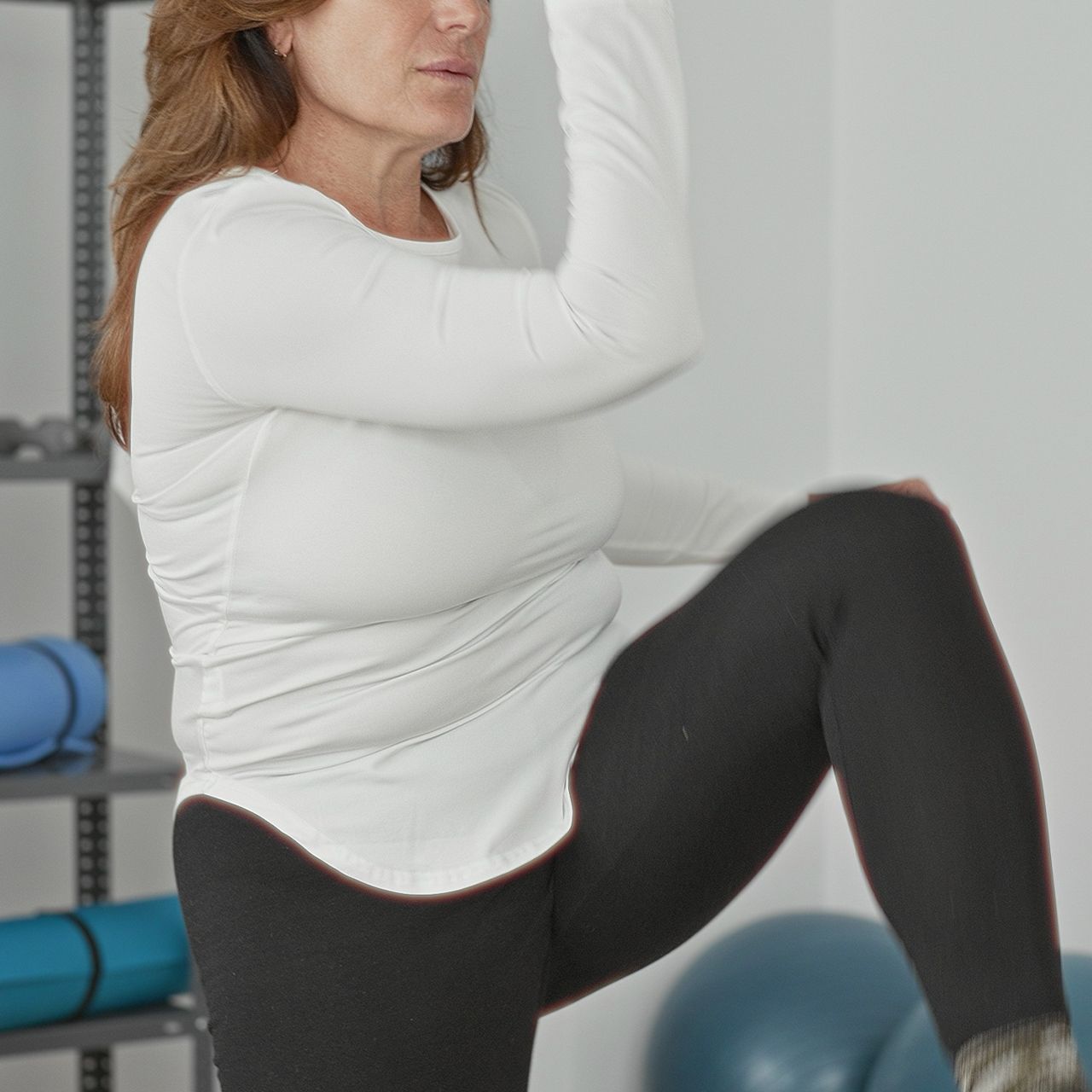
3. Standing Knee Marches
If you’re looking for a movement that gently elevates your heart rate while engaging your core, standing knee marches are an excellent option.
To do them:
- Stand with your feet hip-width apart.
- Slowly raise one knee toward your chest while engaging your core muscles.
- Lower it with control.
- Repeat on the opposite side.
- Continue alternating sides for one minute.
Standing knee marches may seem basic, but they challenge balance, coordination, and core stability while adding a light cardiovascular component. They can also help improve hip mobility and make everyday movements like walking, climbing stairs, and getting in and out of a car feel easier.
The Bottom Line
When it comes to flattening your lower belly after 40, there’s no single exercise that can target fat in that area alone. Instead, a combination of strength-building and mobility-focused movements can help improve posture, strengthen your core, support healthy aging, and contribute to overall fat loss when paired with a balanced diet and active lifestyle.
As Dobrez notes, consistency is key. Incorporating low-impact exercises like bird dogs, glute bridges, and standing knee marches into your weekly routine can help you build strength, move better, and feel more confident in your body—without putting unnecessary stress on your joints.