



As we head into summer 2026, many people are doubling down on weight loss goals—but dietitians warn that some of the most common daily drinks may be working against those efforts. From fruit-filled juices to trendy smoothies, what you sip can have a bigger impact on your calorie intake, blood sugar levels, and hunger cues than you might expect.
Experts say the issue often comes down to hidden sugars, stripped nutrients, and liquid calories that don’t keep you full for long. While these drinks may seem convenient or even nutritious on the surface, they can easily add up throughout the day and make it harder to maintain a calorie deficit.
Here are four popular beverages nutrition experts say could be sabotaging your weight loss goals—and what to reach for instead.

Women Are Swapping Their Boring Water For This Ice Pop Electrolyte Mix!

1. Sugary Fruit Juice
A major culprit of inflammation and weight gain is sugary fruit juice, such as store-bought orange juice and apple juice. While fruit certainly makes a healthy breakfast or snack, experts warn that most of the fruit juices you'll find at the grocery store are highly processed, packed with sugar, and stripped of nutrients. "When you drink just fruit juice, the fiber is stripped away and you can consume in one small glass of orange juice the amount of sugar and fructose found in five oranges, minus all of the innate goodness in that orange," nutritionist Dr. Daryl Gioffre says, noting that it's basically "glorified sugar water."
Instead, make your own fruit juice at home so you can control how much sugar, if any, goes into it.

2. Soda
It's no longer surprising to hear how harmful soda is for your health. Some ingredients in certain sodas are even reportedly linked to carcinogenic effects. It's definitely worth reconsidering your consumption of this drink, and Krutika Nanavati, a registered dietitian, nutritionist, and medical advisor at Clinicspots, explains more on this. "Soda contains high amounts of added sugars and carbohydrates, which cause an immediate surge in blood glucose and can result in rapid weight gain if consumed too often. The average 12-ounce can of soda contains 40 grams of sugar, which is equal to 10 teaspoons!"
It's hard to picture eating 10 teaspoons of sugar—but that's the result soda can have on your weight and blood sugar levels. Sparkling water, flavored naturally with slices of fresh fruit or herbs, offers a refreshing and fizzy alternative without the added sugars.

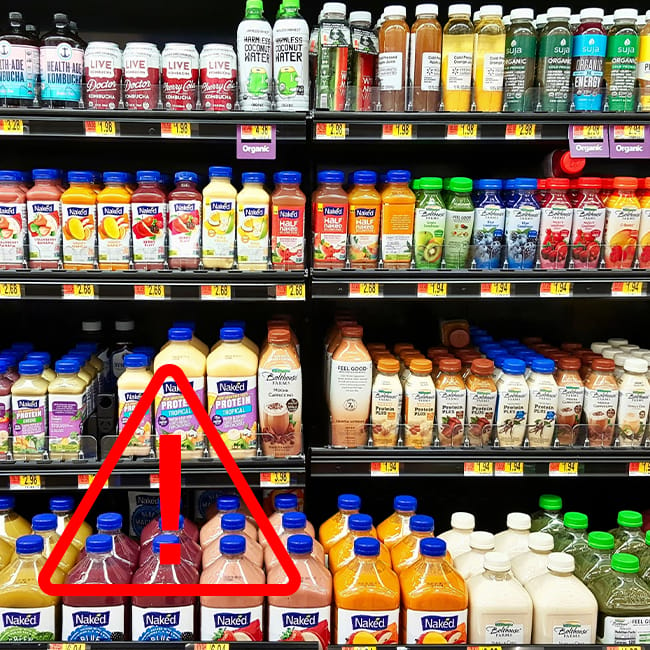
3. Commercial Smoothies
Many commercially available smoothies, especially those from cafes and stores, may contain high levels of sugars, syrups, or sweetened fruit juices, compromising their nutritional value. While smoothies can offer a quick and tasty way to consume fruits and vegetables, it's crucial to be mindful of their ingredients.
"Many commercial smoothies are packed with added sugars, and liquid calories may not be as satisfying as solid ones. Preparing homemade smoothies with whole fruits and vegetables ensures a nutritious and low-calorie option," Shana Abraham, a NASM-certified personal trainer and Precision Nutrition-certified nutrition coach, shares.

4. High-Calorie Coffee Drinks
High-calorie coffee drinks, such as sugary lattes and flavored concoctions, can unwittingly contribute to weight gain and a slow metabolism due to their excessive calories and added sugars. While coffee itself is a low-calorie beverage, the extras like syrups, whipped cream, and sugary flavorings can quickly turn a seemingly innocuous drink into a calorie-laden treat. When you consume too much sugar, your body needs to produce more insulin to manage the glucose in your bloodstream. Over time, this constant demand for insulin can cause your cells to become less responsive to it, leading to insulin resistance.
Abraham says that "coffee drinks with excessive sugars, syrups, and whipped cream contribute empty calories. Choosing black coffee or adding a splash of unsweetened milk can keep your morning beverage low in calories and support weight loss."