



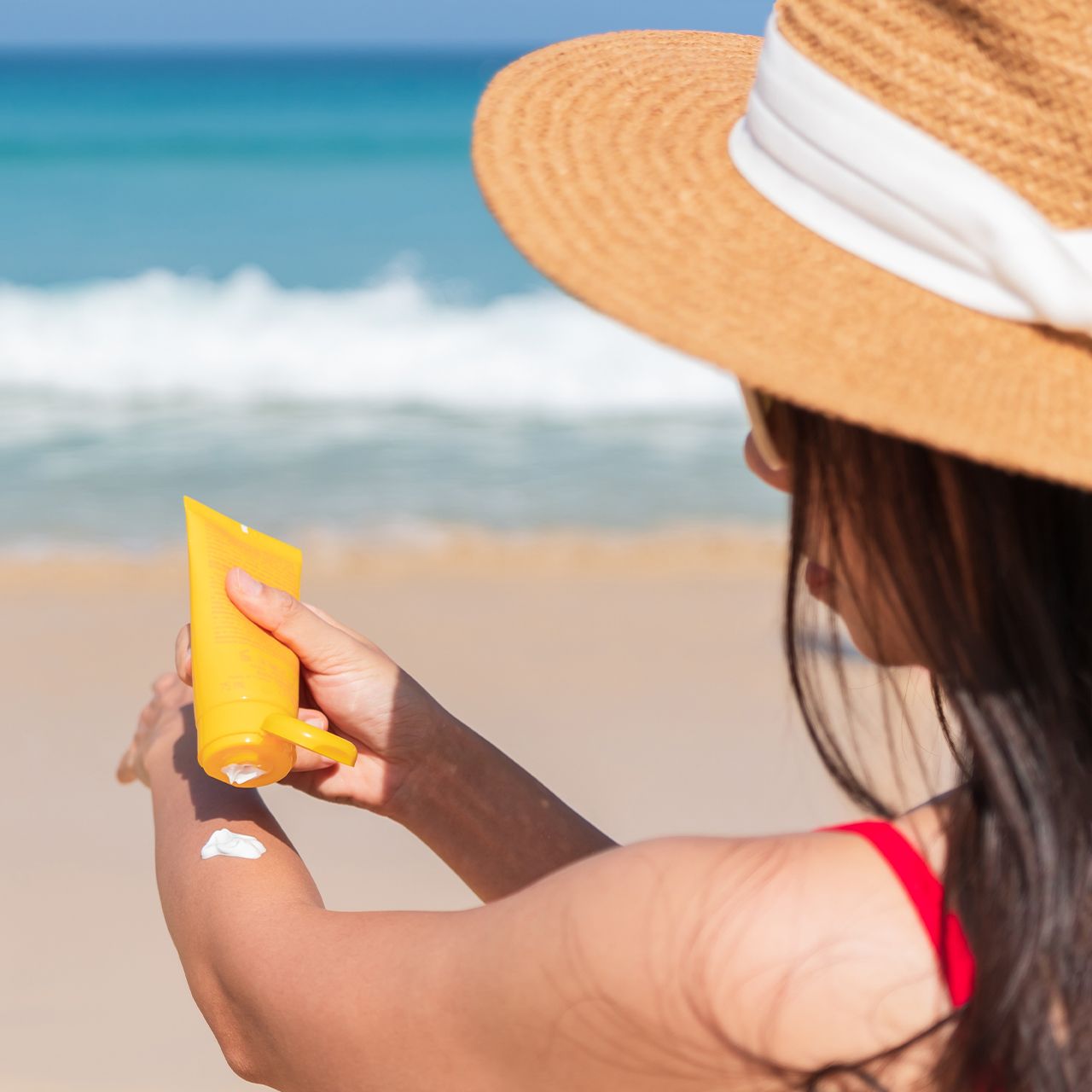
For the first time in more than two decades, the U.S. Food and Drug Administration (FDA) has approved a new active ingredient for over-the-counter sunscreen products, a move that could bring more advanced sun protection options to American consumers.
The ingredient, called bemotrizinol, has been widely used in Europe and other countries for years, but until now it had not been approved for use in sunscreen products sold in the United States. The FDA announced this week that bemotrizinol has officially been added to the list of permitted sunscreen active ingredients, making it the first new sunscreen filter approved under the agency’s over-the-counter sunscreen monograph since the late 1990s.
So why is this such a big deal?

Women Are Swapping Their Boring Water For This Ice Pop Electrolyte Mix!

Bemotrizinol Approved By FDA
According to the FDA, bemotrizinol offers broad-spectrum protection against both UVA and UVB rays, helping shield the skin from sunburn, premature aging, and other forms of UV damage.
The agency also noted that the ingredient demonstrates low absorption through the skin into the body, contributing to its favorable safety profile. The FDA now considers bemotrizinol to be generally recognized as safe and effective (GRASE) for use in sunscreen products designed for adults and children ages six months and older.
Health and Human Services Secretary Robert F. Kennedy Jr. called the approval a major step forward for sunscreen innovation in the U.S. “Bemotrizinol has been used safely in Europe for decades, and FDA’s action will increase competition and consumer confidence in sunscreen products,” Kennedy said in a statement.
The approval follows a request submitted by DSM Nutritional Products LLC, which sought authorization to use bemotrizinol in sunscreen formulations at concentrations of up to 6%. After reviewing scientific data and public comments, the FDA finalized its decision, completing the process just seven months after issuing its proposed order.
For beauty lovers and skincare enthusiasts, the news is especially exciting because many dermatologists have long pointed out that sunscreen filters available overseas often offer newer technologies and formulations than those found in the United States.
The addition of bemotrizinol could pave the way for more innovative sunscreen products with enhanced broad-spectrum protection. The FDA's decision also signals a broader effort to modernize the sunscreen market and streamline the approval process for future innovations.
While consumers won't see bemotrizinol-containing sunscreens on shelves overnight, the approval clears the path for brands to begin incorporating the ingredient into future formulations.
For anyone serious about protecting their skin from sun damage and premature aging, that could mean more options—and potentially better sunscreen experiences—in the years ahead.