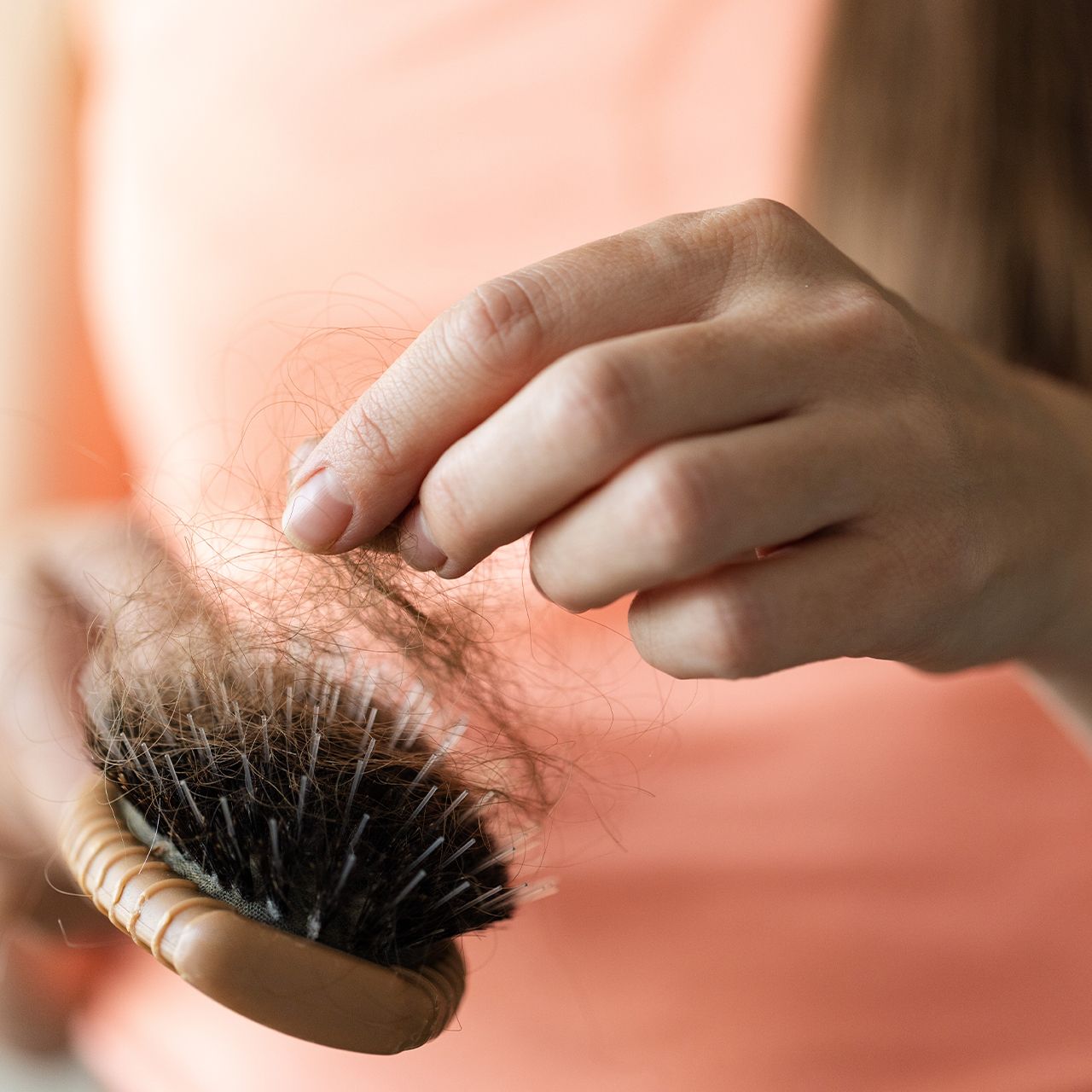



Seeing more strands of hair in your brush, shower drain, or on your pillow can be alarming, but hair shedding is a common experience for women at every stage of life. In fact, it’s normal to lose anywhere from 50 to 100 hairs a day as part of the natural growth cycle. However, factors such as stress, hormonal fluctuations, illness, nutritional deficiencies, medications, and aging can push more hairs into the shedding phase, making hair loss seem sudden and excessive.
But hair shedding isn’t always something you have to simply accept.
While the right solution depends on the underlying cause, experts say there are several steps that may help slow excessive shedding and support healthier hair growth. From addressing nutrient gaps and managing stress to exploring proven treatments and lifestyle changes, there are ways to give your hair its best chance to recover. Here’s what one doctor recommends if you’re noticing more hair loss than usual.

Women Are Swapping Their Boring Water For This Ice Pop Electrolyte Mix!

1. Head To Your Dermatologist
If you're experiencing noticeable hair shedding, one of the most important first steps is scheduling an appointment with a dermatologist. Excessive hair loss can have many underlying causes, including hormonal changes, iron deficiency, thyroid disorders, stress, certain medications, or genetic factors. A dermatologist can evaluate your scalp, review your medical history, and order blood work to help pinpoint the cause. Getting an accurate diagnosis is key because treatments that work for one type of hair loss may do little for another. The sooner you identify what's behind the shedding, the sooner you can begin a targeted treatment plan that may help preserve and regrow hair.

2. Oral Minoxidil
Oral minoxidil has become an increasingly popular treatment for certain types of hair loss in women. The medication helps improve blood flow to hair follicles and may extend the growth phase of the hair cycle, encouraging thicker, fuller growth over time. Dermatologists often prescribe low-dose oral minoxidil for women who find topical treatments inconvenient or irritating. While it can take several months to see results, many patients experience reduced shedding and improved hair density with consistent use. Because oral minoxidil can have side effects and isn't appropriate for everyone, it should only be taken under a doctor's supervision.

3. Spironolactone
For women whose hair shedding is linked to hormones, spironolactone may be an effective treatment option. This prescription medication works by blocking the effects of the hormone androgens. It is commonly prescribed for female pattern hair loss, particularly during perimenopause and menopause when hormonal fluctuations can accelerate thinning. Spironolactone may help slow shedding and support healthier hair growth, but make sure that you are getting regular checkups at your doctor while taking this medication.